

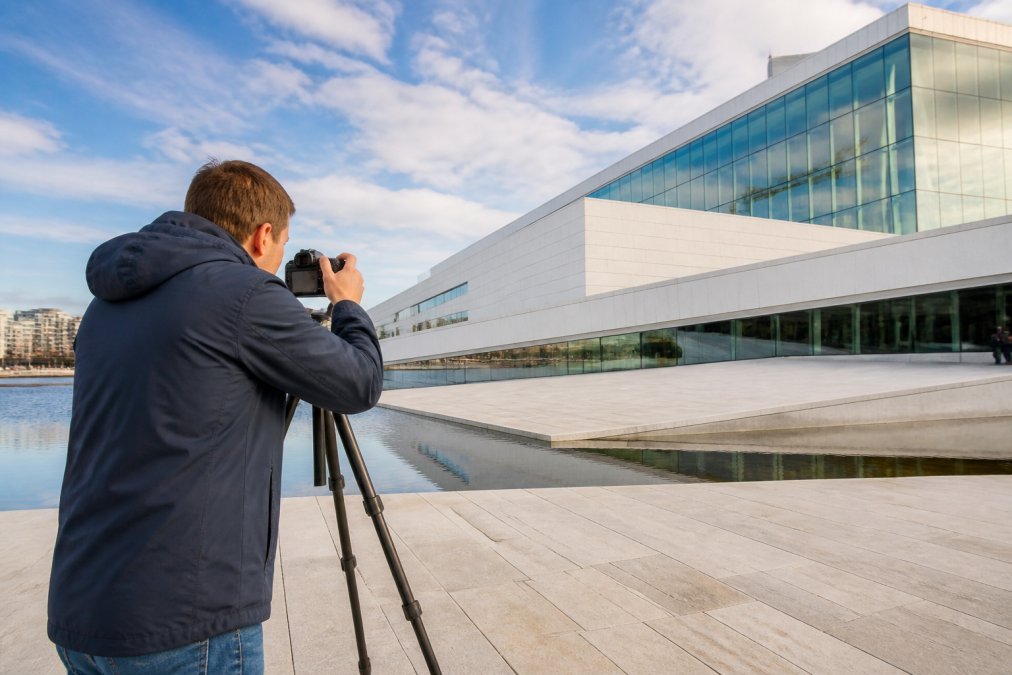
Architectural Photography Tips for Developers: 2026 Guide
Table of Contents
- Why Architectural Photography Drives Development ROI
- Planning and Pre-production: The Developer’s Role
- Building the Architectural Photography Shot List for Developers
- Preparing Buildings for Architectural Photoshoots
- Hiring Professional Architectural Photographers
- Budgeting for Professional Shoots and Image Licensing
- Using Architectural Images in Marketing and SEO
- Frequently Asked Questions
Last Updated: September 14, 2026
Why Architectural Photography Drives Development ROI
Architectural photography captures buildings and spaces in images that document, market, and sell the built environment. For developers, it is the primary visual asset that pre-sells units, satisfies lenders, and supports every listing, brochure, and campaign that follows. This guide from BLACKWATER Promotions breaks down the architectural photography tips for developers that move a project forward.
Most developers treat the shoot as a final errand after construction. The teams that win plan it months earlier, with a shot list tied to sales goals. Below, we cover the full workflow, from planning through hiring, budgeting, and using the images well after delivery.
Planning and Pre-production: The Developer’s Role
Pre-production is where developers have the most use and exercise the least. Lock the shoot date before landscaping, staging, and cleaning schedules are finalized. Your job comes down to four things:
- Confirm the building is genuinely photo-ready, not “almost done”
- Provide site access, parking, and a point of contact for the day
- Approve the shot list so nothing critical is missed
- Decide in advance how images will be used, since that shapes what gets captured
That last point matters: a billboard hero, a leasing-page interior, and a brochure detail shot all require different framing and time on site.
Staging and Property Preparation
Staging answers the buyer’s real question: what would it feel like to live or work here? Empty rooms photograph as cold and small, while a few deliberate pieces give scale and warmth. Focus your budget where the camera will point, the lobby, primary living or working space, and amenity areas carry the marketing weight. Bedrooms and back offices rarely earn a full styling budget.
Building the Architectural Photography Shot List for Developers
A shot list is a written agreement between developer and photographer about what the final gallery must contain. Build it backward from your sales and leasing materials: every image needed for the website, brochure, and listing should appear before the camera arrives.
Start with the must-haves, then add optional coverage if time allows. Rank each shot by priority so the photographer knows what to protect if weather or light turns.
Shot Category | Priority | Typical Use | Notes |
|---|---|---|---|
Exterior hero | Essential | Website, signage, ads | Best at golden hour |
Facade and entry | Essential | Listings, wayfinding | Straight verticals required |
Primary interior | Essential | Leasing pages | Staged and decluttered |
Amenity spaces | High | Brochures, social | Show scale and finish |
Detail shots | Optional | Brand and press | Materials, fixtures, texture |
Exterior Hero Shots and Facade Coverage
The exterior hero shot represents the entire project, so it deserves the most planning: a clean angle, correct vertical lines, and light that flatters the materials. Facade coverage is a separate job, at least one straight-on elevation plus two or three angled views showing massing and context. Corners, entrances, and distinctive features should each get their own frame.
Interior and Amenity Documentation
Interior images sell the experience, not the floor plan. Wide views establish the space; tighter shots show finish quality. Amenities are where developers routinely under-shoot, a well-photographed gym, rooftop, or coworking lounge becomes a leasing argument. If an amenity is unfinished, reschedule it or leave it off the list rather than showing a construction zone.
Preparing Buildings for Architectural Photoshoots
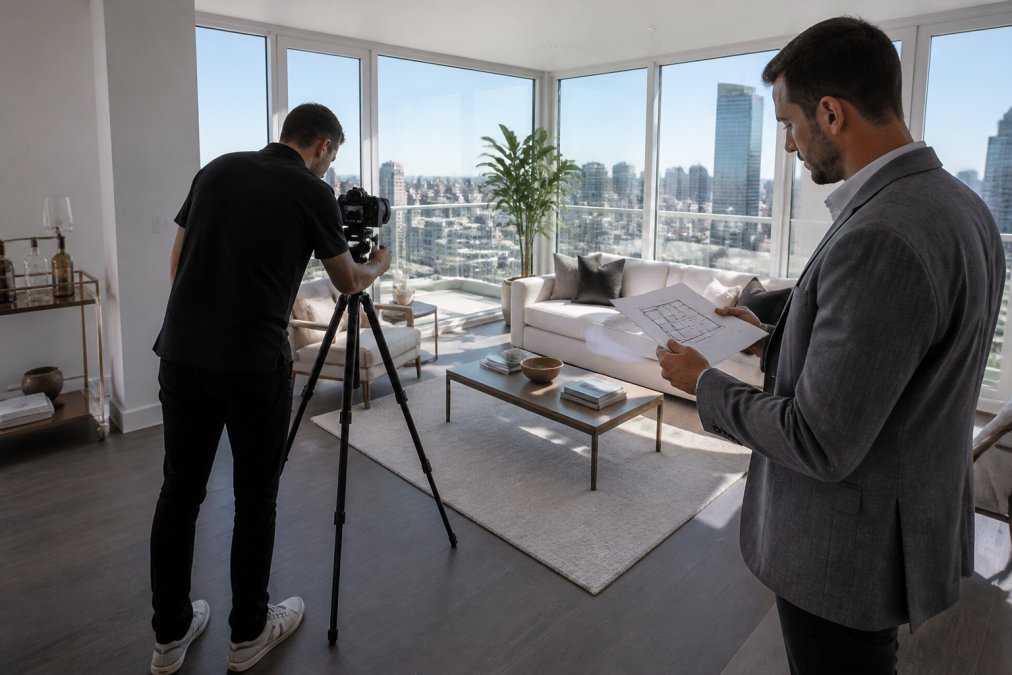
Preparing a building for an architectural photoshoot means removing every trace of construction, occupancy, and daily life before the shutter opens. It is the step developers most often underestimate and the cheapest to get right. Work through this checklist in the final week:
- Confirm all trades have finished and cleaned, with no ladders or materials in frame
- Wash exterior glass and remove protective film and stickers
- Clear all vehicles, dumpsters, and equipment from sightlines
- Stage key rooms and remove personal clutter from occupied units
- Test every light fixture and replace any dead bulbs
- Mow, edge, and water landscaping two days before, not the morning of
Hiring Professional Architectural Photographers
Hiring a professional architectural photographer is a decision about risk, not just quality. A specialist brings the right lenses, lighting control, and post-production discipline to make a building look correct; a generalist often produces flat or distorted images. Look for a portfolio of completed buildings, evidence of perspective control, and a clear scoping and delivery process. Ask how they handle weather delays and whether they carry liability insurance for site work.
What Separates a Specialist From a Generalist
The clearest tell is the lens. Architectural work depends on tilt-shift (perspective-control) lenses, which keep vertical lines parallel instead of letting a building lean backward. A generalist shooting a tall facade with a standard wide-angle either accepts that keystoning or fixes it in post by stretching the frame, softening edges and distorting proportions. Ask to see straight-on elevations and check whether the verticals are actually vertical. The second tell is lighting discipline: interiors are a mixed-light problem, since daylight through the windows is far brighter than the room’s fixtures, so a single exposure either blows out the view or buries the interior in shadow. Specialists solve this with bracketed exposures blended in post, off-camera flash, or both; generalists often deliver one flat frame with muddy windows.
What to Ask Before You Sign
Before signing, get written answers to these questions:
- What is the exact deliverable, and how many final images are included?
- Who owns the copyright, and what usage rights are granted?
- Is retouching included, and to what extent?
- What is the rescheduling policy if weather or construction delays the shoot?
- Will drone or aerial coverage be part of the package, if you need it?
Deliverables, Copyright, and Usage Rights
The U.S. Copyright Office guidance on photography ownership is worth reading before you negotiate, because copyright and usage rights are two different things and the distinction determines what you can legally do with the images.
Under current law, copyright in a photograph belongs to the photographer (or their studio) from the moment the shutter clicks, unless the work is a “work made for hire” or the rights are explicitly transferred in a signed writing (What is Copyright?). In practice, most architectural photographers retain copyright and grant the client a license. That license is where the real negotiation happens, and it should spell out:
- Media and channels, website, print, paid social, MLS/listing platforms, broadcast, out-of-home
- Duration, a defined term (for example, three years) versus perpetual
- Territory, local, national, or worldwide
- Exclusivity, whether the photographer can resell the same images to other parties
- Sublicensing, whether your marketing agency or broker can use the images
A common pattern is a base fee covering a defined set of final images plus a limited license, with add-ons priced separately for expanded use, additional retouching, or extra finals. Ask for license terms in the estimate, not after delivery, renegotiating later usually costs more.
Scheduling, Weather, and Site Logistics
Build contingency into the contract. Architectural shoots are weather-dependent, and a rained-out exterior day can push the whole schedule. Agree in writing on how many reschedules are included at no charge, how much notice is required, and who bears the cost if the delay is caused by unfinished construction rather than weather. On the day, confirm access details in advance: crew parking, elevator or loading-dock use, a site contact who can unlock units, and permission for any drone flight. Drone work carries its own rules, commercial flights generally require a remote pilot operating under the FAA’s small unmanned aircraft regulations, and some properties sit in controlled airspace where additional authorization is needed (faa.gov). Ask the photographer to confirm credentials before you put aerial coverage in the shot list.
Budgeting for Professional Shoots and Image Licensing
Budgeting for a professional shoot is less about a single price and more about scoping what the project actually needs. Pricing depends on property size, number of final images, travel, and whether aerial coverage or extended licensing is required.
Most developers get surprised by licensing, not photography. A photographer typically retains copyright and grants a license to use the images within defined limits. Expand those limits later, and you may pay again.
What Actually Drives the Cost
Most estimates are built from some combination of:
- Time on site, a half-day versus a full day, and whether the shoot spans multiple buildings or locations
- Number of final images, the fee usually covers a defined set of edited finals, not every frame shot
- Retouching depth, basic color and lens correction versus compositing, sky replacement, or removing construction debris
- Aerial coverage, drone work adds a second setup, a licensed pilot, and often a separate deliverable set
- Travel and logistics, distance, overnight stays, and any site-access costs
- License scope, the media, duration, and territory you need, which is frequently the largest swing factor
Ask for the estimate broken into these line items rather than one lump sum. That makes it obvious what you are paying for and where you can trim, for example, dropping optional finals or narrowing the license term instead of cutting the retouching that makes the hero shot usable.
DIY Versus Professional: The Real Trade-off
DIY is genuinely viable for some uses. Progress photos, internal documentation, and quickly replaced social posts can be shot on a modern phone or mid-range camera and look fine. The calculus changes when the image has to sell. For a hero exterior, a leasing page, or anything in paid media, the cost of a professional shoot is usually small relative to the value of the asset it produces, and a leaning facade, blown-out windows, or a construction cone in the frame undermines the listing it is supposed to support. The practical rule most developers land on: DIY the disposable, hire out the permanent.
Licensing: The Line Item That Grows
Licensing is where budgets quietly expand. A base fee often covers a narrow use, say, your own website and a listing, and every additional channel, territory, or year of use can trigger an additional fee. If you plan to run the same images across print, paid social, out-of-home, and a broker network, negotiate that scope up front.
A Simple Budgeting Framework
Before requesting quotes, write down four things:
- The must-have shot list, the images the campaign cannot launch without
- The channels, every place those images will appear, now and in the next year or two
- The lifespan, how long the images need to stay current before the project changes
- The ceiling, the maximum you will spend, including licensing and any retouching add-ons
Hand those four items to two or three photographers and compare estimates line by line. The lowest number is not always the cheapest once license scope and retouching are normalized, and the highest is not automatically the safest. What you are really buying is a set of images you can use, without restriction, for as long as the campaign needs them.
Using Architectural Images in Marketing and SEO
Architectural images do more for marketing than fill space. They are the visual proof behind every listing, landing page, and campaign, and they can be optimized to earn search visibility on their own.
Treat images as content, not decoration:
- Name files descriptively, using the project name and location rather than camera defaults
- Write specific alt text that describes the building and the view
- Compress images so pages load quickly without visible quality loss
- Publish images on your own site first, so search engines associate them with your project
For developers running campaigns across multiple channels, consistency matters. The same hero image should appear across the website, listings, and social, which is why a single well-planned shoot beats several ad-hoc ones. This is the kind of project BLACKWATER Promotions handles for corporate clients, coordinating photography and video so the visual assets stay aligned across every channel.
Most developers lose value not because their buildings photograph badly, but because the shoot is planned too late and scoped too narrowly to serve marketing. The fix: plan the shoot alongside construction, build a shot list from your sales materials, prepare the property properly, and negotiate usage rights before you sign. BLACKWATER Promotions specializes in corporate film and photography with a collaborative approach to project development and an efficient production process, so your visual assets are ready when your campaign is. Let’s Talk and get your next project photographed right the first time.
Frequently Asked Questions
What should developers look for when hiring an architectural photographer?
Look for a portfolio of completed developments, not just single homes. Ask about their process for handling vertical alignment and lens distortion, since leaning walls signal amateur work. Confirm they carry liability insurance and can deliver both stills and video from the same visit. Ask who owns the images after delivery and whether licensing covers billboards, listings, and paid social. A photographer who documents projects like yours will understand how to show scale, materials, and context.
What is the best time of day for exterior architectural photography?
Golden hour, roughly the first hour after sunrise and the last hour before sunset, gives warm light and long shadows that add depth to a facade. Blue hour, just after sunset, works well when interior lights are on and you want a building that glows against a dark sky. Midday sun creates harsh shadows and blown highlights. Schedule exterior shots around these windows and plan interiors for the middle of the day when ambient light is even.
How do you prepare a construction site for a professional photoshoot?
Treat preparation as a punch-list item, not an afterthought. Clear equipment, dumpsters, and portable toilets from every camera angle. Pressure-wash hardscape, clean windows inside and out, and remove protective film. Stage model units with furniture, plants, and neutral art so rooms read as livable. Coordinate with your GC so trades pause work in visible areas during the shoot. A half-day of prep prevents a reshoot that costs far more.
How can developers use architectural photography for marketing materials?
Architectural photography feeds nearly every channel a development uses: listing platforms, brochures, hoarding graphics, investor decks, and paid social. High dynamic range images let you show interior and exterior detail in one frame, which works well for hero shots. Keep a master library organized by building, unit type, and amenity so your marketing team pulls the right image fast. Consistent, well-licensed images also support SEO when they are named and tagged properly.