

Professional Videographer vs In-House Team: 2026 Guide
Table of Contents
- Professional Videographer vs In-House Team: Side-by-Side Comparison
- Cost of In-House Video Production Team
- Benefits of Outsourcing Corporate Video Production
- Video Production Workflow Best Practices
- When to Build In-House vs Hire Professional Services
- Pros and Cons: Making Your Decision
- Frequently Asked Questions
Last Updated: September 3, 2026
Professional Videographer vs In-House Team: Side-by-Side Comparison
The choice between hiring a professional videographer and building an in-house team fundamentally shapes your video production capacity, costs, and creative control. At BLACKWATER Promotions, we’ve worked with companies making this exact decision, and the answer depends far more on your specific workflow demands than on any universal rule.
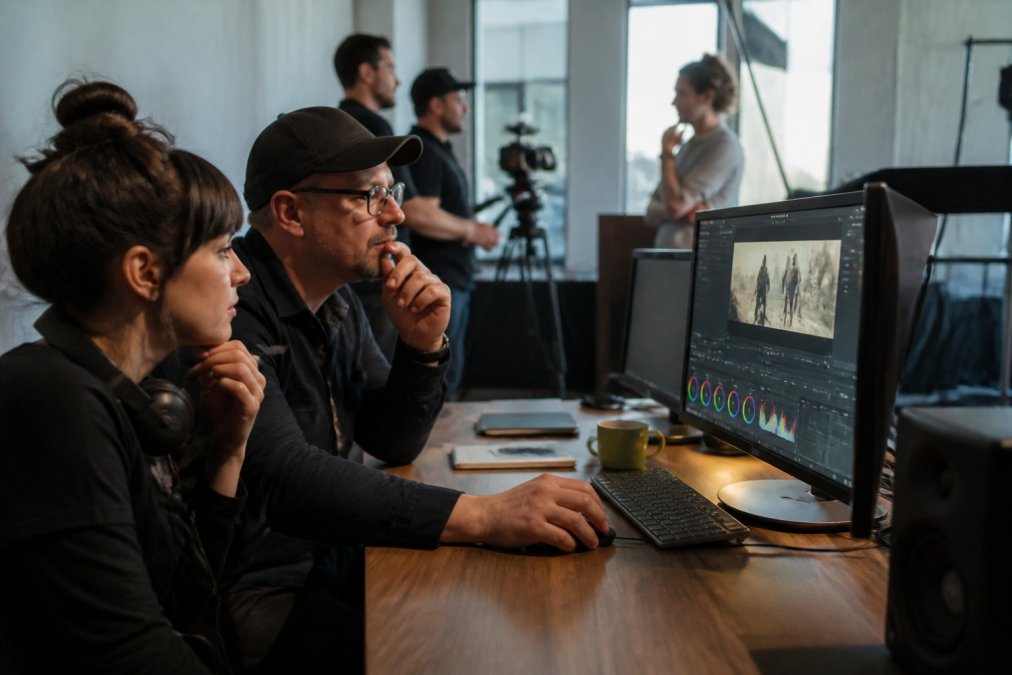
A professional videographer or agency brings specialized expertise, established workflows, and immediate capacity. An in-house team offers institutional knowledge, brand consistency, and direct control over your creative direction. Neither is universally superior, the winning choice depends on your content volume, budget constraints, and how tightly your video production integrates with your broader marketing strategy.
Here’s the core tension: outsourcing costs more per project but requires zero overhead. Building in-house costs less per video once you reach a certain volume threshold, but demands significant upfront investment and ongoing salary commitments. The question isn’t which is “better”, it’s which aligns with your business model.
| Factor | Professional Videographer/Agency | In-House Team |
|---|---|---|
| Setup Time | Immediate | 3-6 months to hire and onboard |
| Flexibility | High, scale up/down per project | Fixed capacity regardless of demand |
| Brand Consistency | Requires detailed briefs and guidelines | Built in naturally over time |
| Equipment Investment | Covered by provider | Your responsibility |
| Turnaround Time | Depends on booking and workload | Controlled by your team |
| Creative Direction | Collaborative; less day-to-day control | Complete internal control |
| Long-term Cost per Video | Higher at high volumes | Lower once team is established |
| Institutional Knowledge | Resets with each new vendor | Builds continuously |
Cost of In-House Video Production Team
Building an in-house video team requires understanding the full cost structure beyond base salaries. Many companies underestimate the true investment, discovering hidden expenses only after hiring their first videographer.
Salary and Benefits
A full-time videographer or video producer typically represents your largest expense. Salaries vary based on experience level, geographic market, and specialized skills. Beyond base compensation, budget for benefits including health insurance, retirement contributions, paid time off, and professional development. These add roughly 25-30% to your stated salary figure.
If you’re building a team rather than hiring a single videographer, you’ll likely need a mix of roles: a producer managing workflows and client communication, a videographer handling shoots, and an editor managing post-production. Alternatively, you might hire one versatile videographer and outsource editing to freelancers. The staffing model depends on your content volume and whether you need simultaneous project capacity.
Consider that full-time employees require consistent work. If your content pipeline doesn’t generate enough projects to keep them productive year-round, you’re paying for idle capacity. Many mid-market companies discover they have 6-8 months of solid production work annually, leaving significant downtime.
Equipment and Overhead
Professional video production requires substantial equipment investment. Cameras, lenses, audio gear, lighting, tripods, and stabilization equipment represent a meaningful capital outlay. Professional-grade cinema cameras start around $3,000-$5,000 for entry-level options and climb significantly higher for broadcast-quality gear (bhphotovideo.com). A complete kit with backup equipment, specialized lenses, and professional audio gear easily reaches $15,000-$30,000 or more (bhphotovideo.com).
Beyond hardware, account for editing software subscriptions, cloud storage for massive video files, backup systems, and insurance. Video files consume significant storage, a single day of 4K shooting can exceed 500GB (peer-reviewed research). Professional editing suites require powerful workstations with dedicated GPUs, which cost substantially more than standard office computers.
Equipment depreciation is real. Professional cameras and lenses lose value, software licenses require annual renewal, and technology evolves. What’s modern today becomes dated in 3-4 years. Building an in-house team means accepting ongoing equipment refresh cycles.
Workspace also factors in. You’ll need dedicated studio or office space for editing, client meetings, and equipment storage. If you’re renting studio space for shoots, that’s an additional recurring expense.
Benefits of Outsourcing Corporate Video Production
Outsourcing video production to professional agencies or freelancers offers distinct advantages that matter most when your content needs are unpredictable or your team lacks specialized video expertise.
The primary benefit is immediate access to established expertise. A professional videographer or agency has developed workflows, creative direction skills, and technical knowledge that take years to build internally. They understand how to work efficiently, manage complex shoots, and troubleshoot problems on set. This expertise directly translates to faster production timelines and higher-quality output.
Scalability without commitment represents another key advantage. If you need 10 videos this quarter and 2 next quarter, outsourcing lets you adjust without managing layoffs or idle staff. You pay for capacity only when you need it. This flexibility is especially valuable for companies with seasonal content demands or unpredictable marketing initiatives.
Professional agencies bring fresh creative perspective. Your in-house team might develop blind spots about your brand after months of working on it. External videographers ask questions your team stopped asking years ago, often surfacing new creative directions. This outside-in perspective can elevate your content.
Outsourcing also eliminates equipment burden. The videographer brings their own gear, handles maintenance and upgrades, and assumes the depreciation cost. You avoid the capital investment and ongoing equipment management. For companies that produce video sporadically, this cost structure is far more efficient than owning professional equipment that sits idle.
Additionally, outsourcing reduces hiring and management complexity. Recruiting skilled videographers is competitive. Once hired, they require ongoing professional development, performance management, and retention strategies. Outsourcing lets you focus on your core business rather than managing creative staff.
Video Production Workflow Best Practices
Regardless of whether you outsource or build in-house, your workflow structure determines whether projects run smoothly or become chaotic. The best practices that separate efficient teams from frustrated ones apply universally.
Start with a clear creative brief. Before any shoot happens, document the project’s objectives, target audience, key messages, and desired tone. A vague brief leads to misaligned expectations, wasted shooting time, and expensive reshoots. The brief should answer: What is this video for? Who watches it? What should they feel or do after watching? What’s the core message? Specificity here saves days of back-and-forth later.
Establish a feedback and approval process before production begins. Decide who needs to review and approve at each stage: concept, shot list, rough cut, and final edit. Without a clear approval path, you end up with stakeholders offering contradictory feedback mid-project. Define approval authority and timelines upfront. “We need feedback by Friday” beats “let me know when you have thoughts.”
Build in buffer time. Professional videographers know that shoots often run longer than expected. Weather delays outdoor shoots. Talent feels uncomfortable on camera and needs extra takes. Locations have unexpected noise or lighting issues. A realistic timeline assumes things will take longer than planned. If your deadline is immovable, communicate that clearly upfront so the videographer can scope accordingly.
Manage file organization from day one. Video projects generate hundreds of files: raw footage, project files, audio tracks, graphics, revisions. Without clear naming conventions and folder structures, finding the right asset becomes a nightmare. Establish naming standards before the first shoot. Use consistent date formats, project codes, and version numbers. This matters even more when multiple people work on the same project.
Document decisions. When you decide to change the script, shoot location, or timeline, write it down. Email confirmations prevent “I thought we were doing X” conflicts later. This seems obvious, but many teams skip it and pay the price.
When to Build In-House vs Hire Professional Services
The decision hinges on three factors: content volume, budget capacity, and creative control requirements.
Build in-house when your company produces consistent, high-volume video content. If you’re creating 20+ videos annually with predictable timing, in-house capacity makes financial sense. The per-video cost drops below outsourcing once you reach that volume threshold. Additionally, if your brand requires extremely tight visual consistency across all videos, in-house control becomes valuable. Your team internalizes brand guidelines and applies them automatically rather than explaining them repeatedly to external vendors.
Build in-house when you have complex, ongoing projects. Long-form documentary series, weekly video content, or projects requiring extensive stakeholder collaboration benefit from a dedicated team that understands your business deeply. This institutional knowledge compounds over time.
Hire professional services when your content needs are sporadic or seasonal. If you produce 5-8 videos annually with irregular timing, outsourcing offers better cost efficiency. You avoid paying for idle capacity during slow months.
Hire professional services when you lack in-house expertise. If your team has never produced professional video, bringing in experienced professionals accelerates your learning and prevents expensive mistakes. They teach you what you don’t know while delivering immediate results.
Hire professional services when you need specialized capabilities. If you require aerial videography, complex animation, or broadcast-quality production, outsourcing to specialists makes sense. Building these capabilities internally requires significant investment for sporadic use.
Hybrid Model Framework
Many mid-market companies discover that a hybrid approach optimizes both cost and quality. This model combines in-house production for high-volume, repetitive content with outsourced professional services for specialized or complex projects.
The hybrid model typically works like this: maintain a small in-house team (often one videographer or producer) who handles your baseline content production, product videos, employee spotlights, social media clips, and routine corporate updates. This in-house capacity covers your consistent, predictable needs and keeps brand consistency tight. Then outsource specialized projects: brand documentaries, major campaign videos, aerial shoots, or anything requiring expertise your in-house team doesn’t possess.
This approach offers several advantages. Your in-house team stays productive and engaged with meaningful work rather than routine content. Outsourcing specialized projects to professionals ensures quality without forcing your team to develop every possible skill. You maintain reasonable overhead while accessing expert capabilities when needed. The in-house team learns from professionals on each specialized project, gradually expanding their own skills.
The hybrid model requires disciplined scope management. Clearly define what your in-house team handles versus what gets outsourced. Without clear boundaries, projects slip between categories and create confusion. Establish decision criteria: “In-house handles anything under 2 minutes and under $X budget. Everything else gets evaluated for outsourcing.”
Pros and Cons: Making Your Decision
Professional Videographer/Agency Advantages:
Immediate expertise and established workflows accelerate project timelines. No equipment investment or maintenance burden. Scalability without employment commitments. Fresh creative perspective from outside your organization. Predictable project-based costs. Access to specialized capabilities (aerial, animation, broadcast production) without building those skills internally.
Professional Videographer/Agency Disadvantages:
Higher cost per video at high production volumes. Less direct control over creative decisions. External vendor may not understand your brand as deeply as an internal team. Onboarding new vendors requires detailed briefs and guidelines. Potential quality variation between projects or vendors. Scheduling constraints based on vendor availability rather than your timeline.
In-House Team Advantages:
Lower per-video cost once team is established and productive. Complete creative control and brand consistency. Institutional knowledge that compounds over time. Faster turnaround for routine content. Team understands your business deeply and makes smarter creative decisions. Ability to respond quickly to unplanned content needs.
In-House Team Disadvantages:
Significant upfront investment in salary, equipment, and workspace. Fixed overhead regardless of production volume. Hiring and management complexity. Equipment depreciation and refresh costs. Risk of creative burnout if team handles repetitive work. Skill gaps require ongoing professional development or hiring specialists. Difficult to scale up quickly for major projects.
The decision ultimately reflects your business model. Companies with consistent, high-volume production and tight brand requirements typically favor in-house. Companies with sporadic needs or specialized project requirements typically favor outsourcing. Most mid-market companies find the hybrid model delivers the best balance.
BLACKWATER Promotions works with both in-house teams and companies outsourcing their video production entirely. We’ve seen what works for different business sizes and content strategies. The companies that make the best decisions are those that honestly assess their actual production volume, not their aspirational volume, and match their model to reality.
The video production decision isn’t permanent. Many companies start by outsourcing while they learn what they need, then build in-house capacity once they understand their workflow. Others build in-house, discover they don’t have enough consistent work, and shift to a hybrid model. The key is choosing based on your current situation, not on what you hope your content needs will be in a year.
If you’re producing corporate video content and want to discuss whether outsourcing to professional services or building internal capacity makes sense for your specific situation, BLACKWATER Promotions can help you evaluate your options. We work with companies at every stage, from those just starting video production to established teams looking to optimize their workflow. Learn more about our corporate video production services to see how we’ve helped mid-market companies elevate their brand storytelling.
Frequently Asked Questions
Q: What are the hidden costs of building an in-house video team?
A: Beyond salaries, in-house teams require equipment depreciation, software licenses, office space, insurance, and ongoing training. Full-time employees also need benefits packages, paid time off, and retirement contributions. Creative burnout and turnover add recruitment and onboarding costs. Many companies underestimate total cost of ownership when calculating true expenses beyond base salary.
Q: When is it more cost-effective to outsource video production?
A: Outsourcing makes financial sense for companies producing fewer videos annually, needing specialized skill sets, or facing variable content demand. Project-based pricing with professional videographers eliminates fixed overhead and equipment costs. When turnaround time matters or you lack institutional knowledge in-house, outsourcing often delivers faster results at lower total cost than hiring and training new staff.
Q: Does an in-house videographer provide better brand consistency than an agency?
A: In-house teams can build stronger brand identity over time through institutional knowledge and daily collaboration. However, professional agencies with established creative direction processes often deliver consistent results across multiple projects. The difference depends on your team’s experience and documented brand guidelines. Many successful companies use a hybrid approach: in-house oversight with professional production for complex work.
Q: How do you calculate the ROI of professional video production services?
A: Track metrics like engagement rates, conversion rates from video content, and cost per acquisition. Compare total project cost against revenue generated or leads captured. Professional videographers typically produce high-performing content, which can offset per-project fees through better video marketing ROI. Measure brand awareness lift and customer retention improvements tied to video assets for complete ROI analysis.